

Every unplanned breakdown costs twice: the repair, and the vehicle sitting idle instead of working. Preventive maintenance, servicing vehicles before they fail rather than after, is how fleets avoid both. This guide gives you a practical checklist, organised by how often each check is due, and shows how to schedule the work around how each vehicle is actually used.
What is preventive maintenance?
Preventive maintenance is planned servicing that keeps vehicles running and catches faults before they become failures: inspections, oil and filter changes, brake checks and part replacements, timed to each vehicle's use. The opposite is reactive maintenance, fixing things after they break, usually at the worst moment and the highest cost.
It pays back in four ways:
- Less downtime. Planned servicing keeps vehicles on the road and routes covered.
- Lower repair bills. A small fault caught early is cheaper than the breakdown it becomes.
- Longer vehicle life. Consistent servicing protects resale value.
- Fewer roadside failures. Better for safety, compliance and reputation.
Daily and pre-trip checks
- Tyres: pressure, tread and visible damage.
- Lights and indicators.
- Fluid levels: oil, coolant and screen wash.
- Brakes and dashboard warning lights.
- Mirrors, wipers and horn.
- Load security and any visible leaks.
Weekly checks
- Tyre wear patterns.
- Battery condition.
- Belts and hoses for wear.
- AdBlue level, where fitted.
- Bodywork, with a running damage log.
Mileage and interval services
- Oil and filter changes at the manufacturer's interval.
- Brake pad and disc inspection.
- Air and fuel filters.
- Timing belt or chain, per schedule.
- Safety inspections and preparation for the MOT or annual test.
For HGVs, trailers and PSVs, safety inspection intervals are set by DVSA guidance, not just the manufacturer. See our guide to safety inspection (PMI) intervals.
What to record
For each check, log the date, the mileage, who did it, and any defect and how it was put right. That per-vehicle history keeps intervals on track and makes you audit-ready.
Calendar-based vs usage-based scheduling
Many fleets service on a fixed calendar, every six months say, which over-services vehicles that barely move and under-services the ones working hardest. A van doing 40,000 miles a year and one doing 8,000 should not be on the same schedule.
Usage-based scheduling times each service by the vehicle's real mileage or engine hours, with a date as a backstop. Most fleets set both: "every 10,000 miles or 6 months, whichever comes first."
How to run it well
- Schedule by mileage, hours and date. Use odometer and engine-hour readings so each vehicle is serviced on its real use.
- Act on defects early. Driver defect reports and dashboard warnings should become a booked job, not a note.
- Keep one history per vehicle. It prevents missed intervals and duplicate work, and supports compliance.
- Tie it to cost. Watch maintenance spend per vehicle, so preventive work is lowering total cost, not just adding services.
#1 AI-powered fleet spend control platform
Ready to Stop Losing Money on Fleet Spend?
See how much you could save in the first week. Start your free trial today. Cancel anytime.
How Fleevo keeps preventive maintenance on track
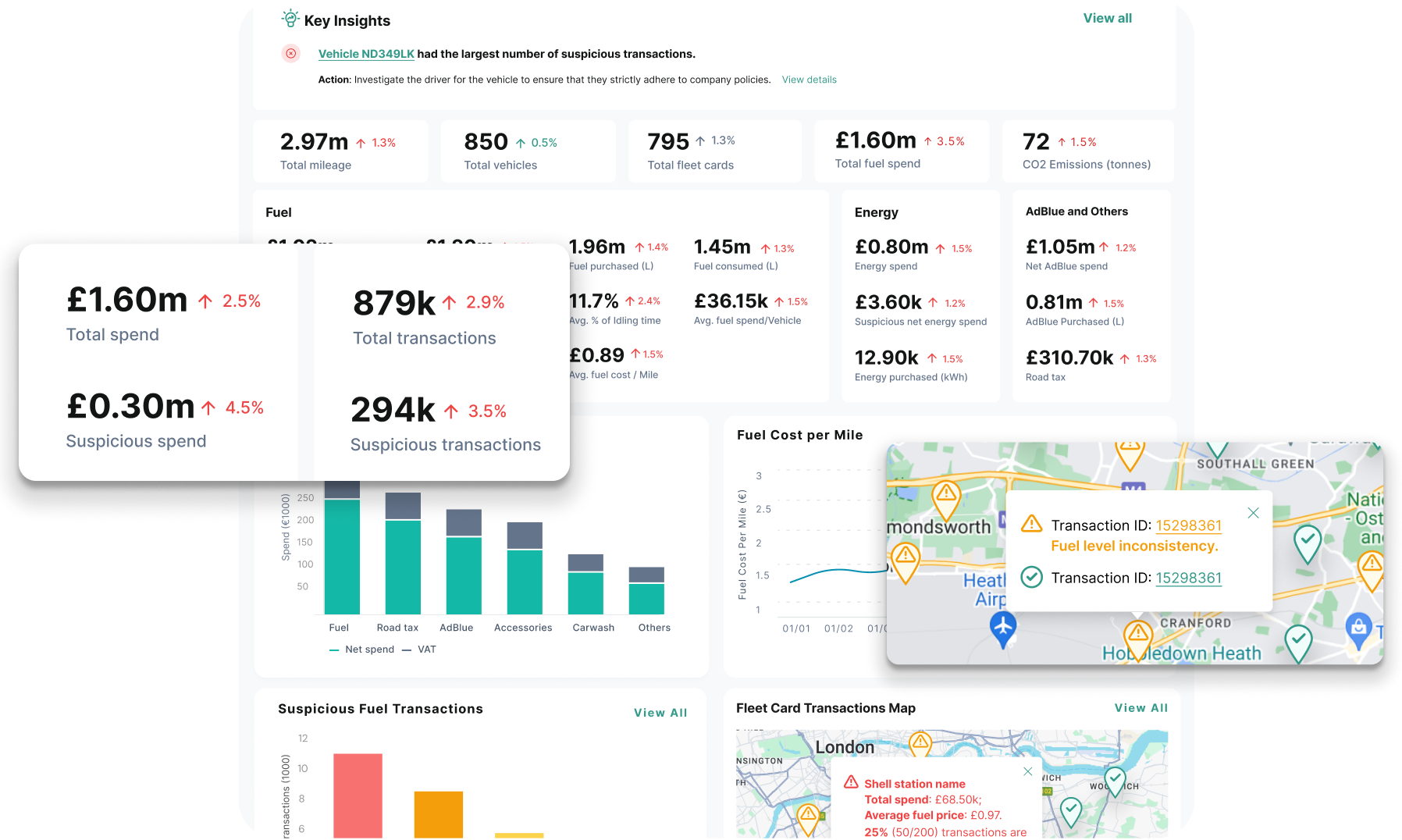
Fleevo's service schedules let you set each service by date, mileage or engine hours, whichever comes first, for one vehicle or a whole group. Odometer readings come from your telematics, and email reminders go out before each service falls due. MOT and annual test expiry dates for UK vehicles are kept in step with DVLA records. Every job is recorded as a work order with a full per-vehicle history, and maintenance invoices are checked line by line in Maintenance Spend Control, so you can see whether preventive work is actually lowering cost.
Preventive maintenance FAQs
What should be on a fleet preventive maintenance checklist?
Daily pre-trip checks (tyres, lights, fluids, brakes), weekly checks (battery, belts, AdBlue, damage), and interval services (oil and filters, brakes, timing belt, safety inspections), each logged per vehicle.
How often should fleet vehicles be serviced?
At the manufacturer's mileage or engine-hour interval, with a date as a backstop, whichever comes first. HGVs, trailers and PSVs also need safety inspections at the interval DVSA guidance and your operator's licence set.
What is the difference between preventive and reactive maintenance?
Preventive maintenance services vehicles before they fail. Reactive maintenance fixes them after they break. Preventive is planned and cheaper; reactive is unplanned, more expensive and causes downtime.
Why keep maintenance records?
A complete per-vehicle history prevents missed intervals and duplicate work, supports compliance and audits, and shows whether preventive spending is reducing total cost.